
Inspection intelligence, in your hands.
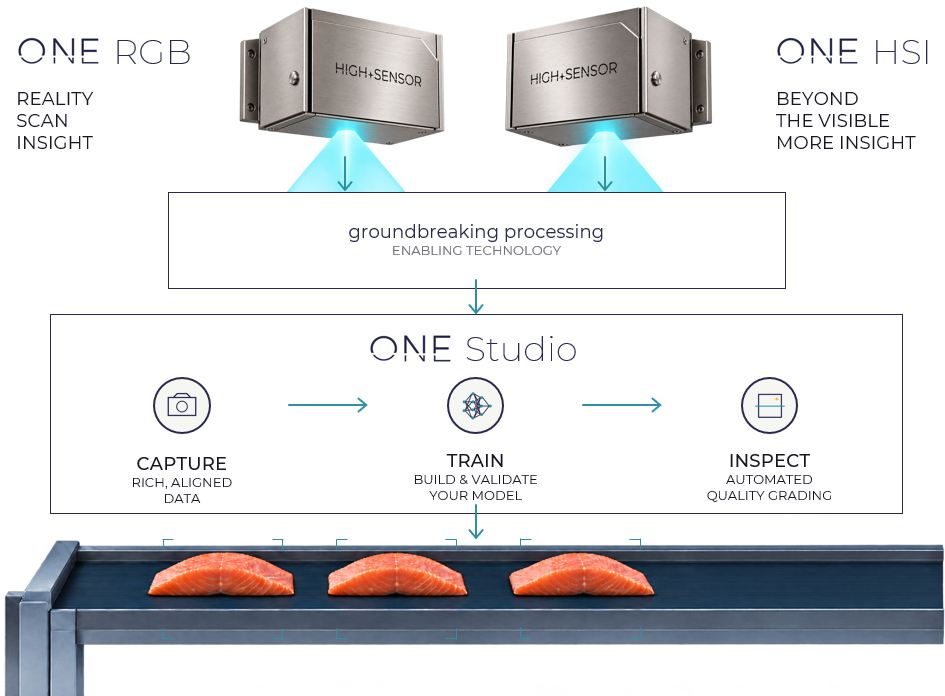
Highsensor ONE is an integrated AI-based food inspection system combining RGB and hyperspectral imaging with HIghsensor ONE Studio. A Software environment for data capture, model creation and inline inspection.
It enables food manufacturers to capture production data, build and validate their own inspection models and operate them in production without data-science expertise.
From visible defects and product grading to spectral and material-property analysis.
THE INSPECTION GAP
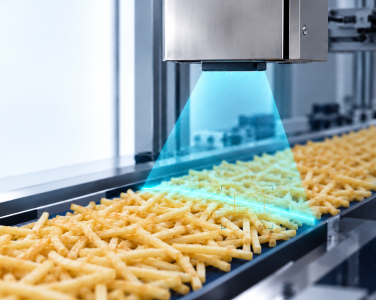
Food production contains more information than conventional inspection can see.
Food quality decisions depend on information about products, materials and processes. But conventional food inspection often captures only part of that information – and adapting inspection to new products or quality requirements can require specialist expertise, calibration and time.

Limited visibility
Relevant product characteristics may be difficult to detect visually – or become visible only after quality has already been lost.

Specialist dependency
Building and adapting advanced inspection models often requires dedicated vision or data-science expertise.

Fragmented Workflows
Data capture, model creation and production inspection are often handled in separate tools, specialist environments and implementation steps.
Highsensor is designed to close that gap by connecting sensing, model creation and production inspection in one workflow that can be operated by the customer.
THE HIGHSENSOR SYSTEM
From sensing to inspection in one system.
Highsensor ONE combines RGB or hyperspectral imaging (HSI) with Highsensor ONE Studio, the software environment that connects data capture, model creation, validation and live inspection.
Choose the sensing technology that fits the application. ONE Studio guides the workflow from capturing data to operating the validated inspection model in production.
HOW IT WORKS
From your product knowledge to live inspection.
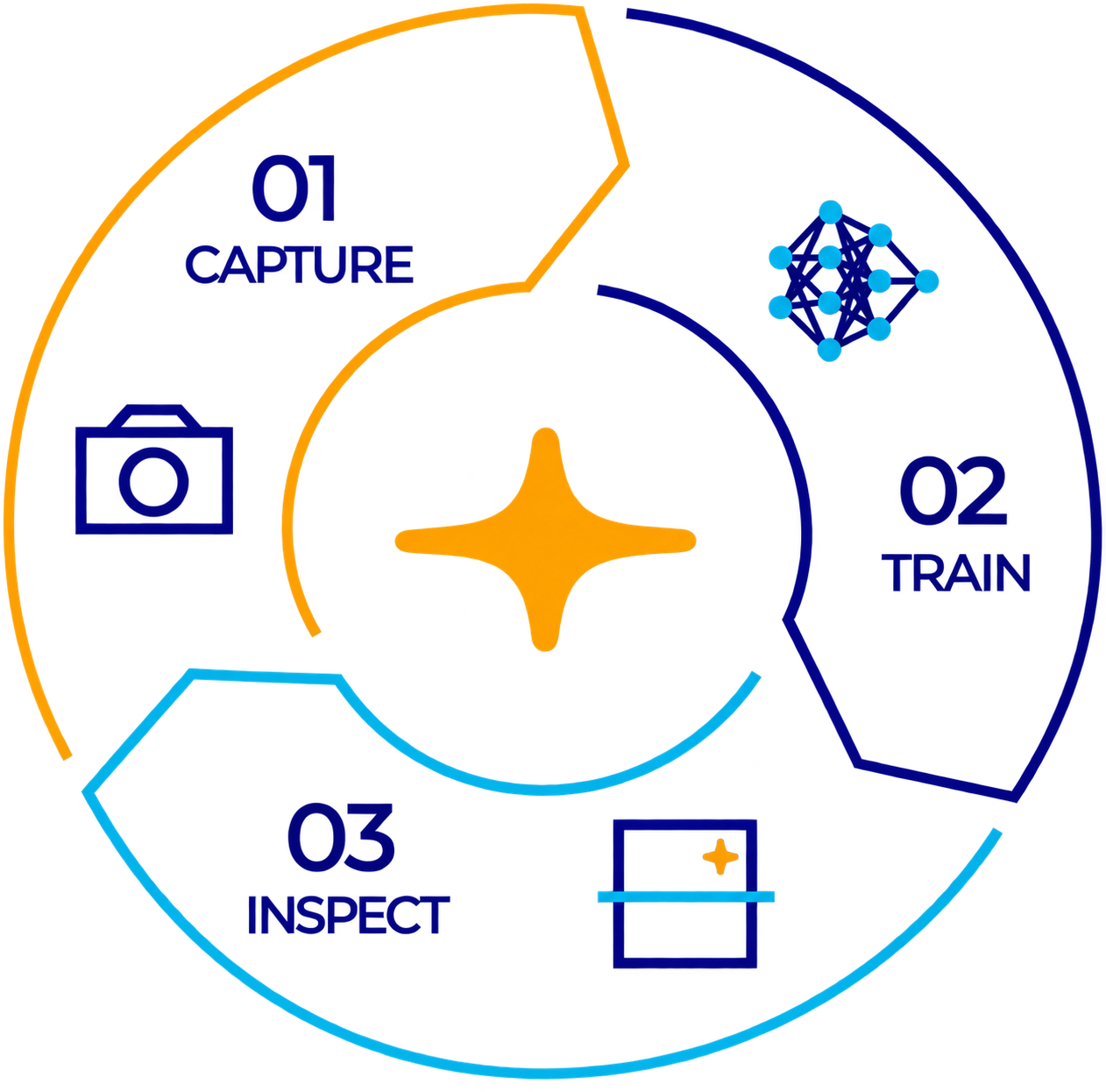
Highsensor ONE guides the inspection workflow from data capture to validated production use, without turning every new inspection task into a specialist project.
01 · CAPTURE
Capture what matters.
Capture production-relevant RGB or hyperspectral image data from your products, materials and process conditions in Highsensor ONE Studio.
02 · TRAIN
Turn production knowledge into a model.
In the same environment, create, test and validate the inspection model through a guided workflow. Your team defines what matters. The system turns it into inspection logic.
03 · INSPECT
Run where production happens.
Use ONE Studio to operate the validated model for inline inspection at the edge and turn inspection results into production-relevant decisions.
Capture. Train. Inspect. One software environment.
Your product knowledge becomes your inspection model.
INSPECTION TECHNOLOGY
See what is visible. Reveal what is not.
RGB and hyperspectral imaging capture different types of information. The right choice depends on what you need to detect, classify or measure in your food production process.
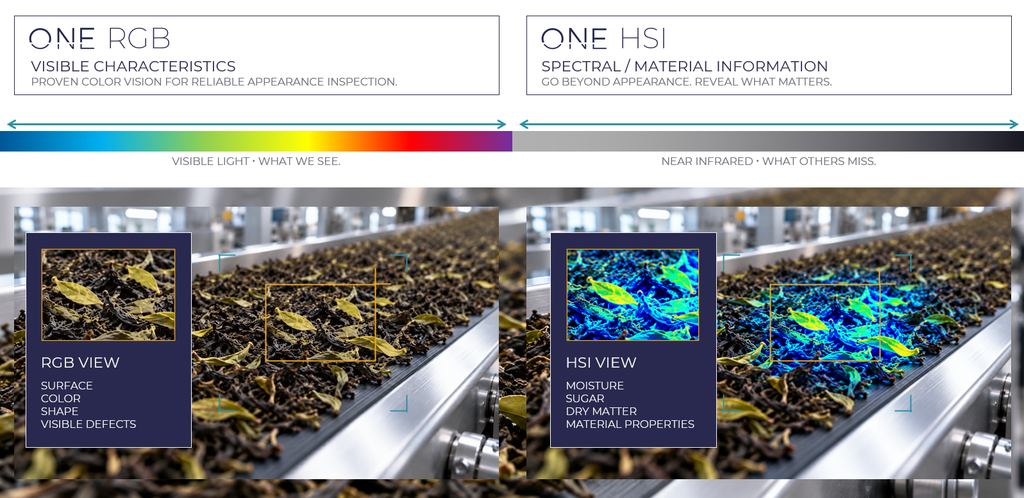
Both imaging technologies are integrated into the same Highsensor ONE Studio workflow.
Same product. Different information.
WHY HIGHSENSOR
Built to adapt with production.
Inspection requirements change with products, materials and processes. Highsensor ONE is designed so food manufacturers can respond without rebuilding the inspection approach from scratch.
Customer-owned models
Build and validate inspection models in-house.
The guided workflow reduces dependency on specialist machine-vision and data-science support.
One integrated workflow
Capture, model creation and inspection belong together.
Hardware, software and production deployment are designed as one system rather than separate project layers.
Robust to variation
Analyse objects, not only pixels.
Object-based analysis is designed to make inspection more robust when products vary in size and form.
Designed for change
Adapt inspection when requirements change.
New products, characteristics or quality questions can be addressed through the same workflow instead of automatically becoming a new specialist implementation.
Highsensor puts inspection capability where the production knowledge already is:
With the customer.
APPLICATIONS
What would you like to inspect?
Highsensor ONE brings AI-based food inspection to different quality tasks — from visible defect detection and automated grading to spectral and material-property analysis.
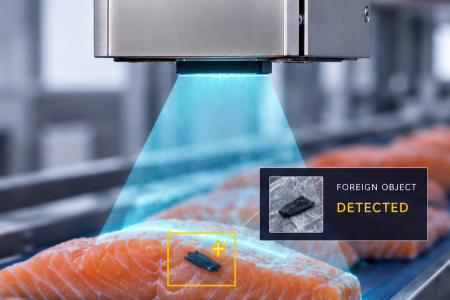
DETECT
Find deviations early.
Detect visible defects, anomalies and unwanted product characteristics during food production.
Examples
- Visible defects
- Surface deviations
- Food anomaly detection
- Damaged products
- Unexpected product characteristics
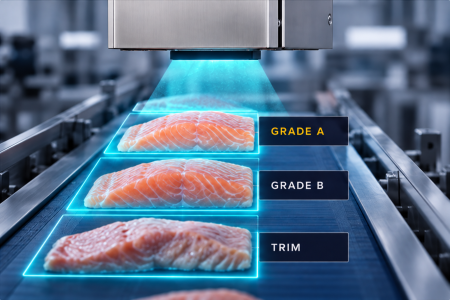
CLASSIFY
Turn product characteristics into quality decisions.
Use food quality classification and automated grading to assign products to defined classes based on visible or measurable characteristics.
Examples
- Automated food grading
- Quality classes
- Sorting criteria
- Shape and size characteristics
- Appearance-based classification
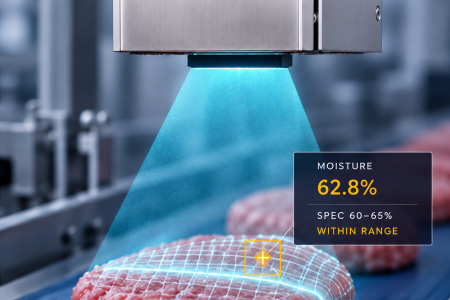
MEASURE
Make material properties measurable.
Use hyperspectral information for validated measurement applications based on spectral and material characteristics.
Application targets
- Moisture content measurement
- Dry matter measurement
- Spectral characteristics
- Material-property differentiation
YOUR APPLICATION
What would you like to inspect?
Tell us about your product, material or quality challenge.
Together, we can explore what Highsensor could make visible, measurable or actionalble.